
Takehara Townscape Preservation District
The Takehara Historic Preservation District is located in Takehara City, Hiroshima Prefecture. It is a beautifully preserved townscape that retains the atmosphere of the Edo period. Originally prospering as a manor of Shimogamo Shrine in Kyoto during the Heian period, Takehara later developed as a center of salt production through the construction of traditional salt fields in the Edo period.
In recent years, bamboo craftsmanship has flourished here, with exhibitions, sales, and hands-on workshops showcasing bamboo crafts. In 1982, the district was designated as an Important Preservation District for Groups of Traditional Buildings by the Japanese government, and it is often referred to as the “Little Kyoto of Aki.”
The area has also been used as a filming location for the anime Tamayura and the NHK TV drama Massan. Located about a 15-minute drive from Tadanoumi Port, it is highly recommended to visit this area together with Okunoshima, also known as Rabbit Island.
Related article: Visiting Okunoshima (Rabbit Island)
Historic Architecture Still Standing Today
Takehara Lattice (Takehara Kōshi)
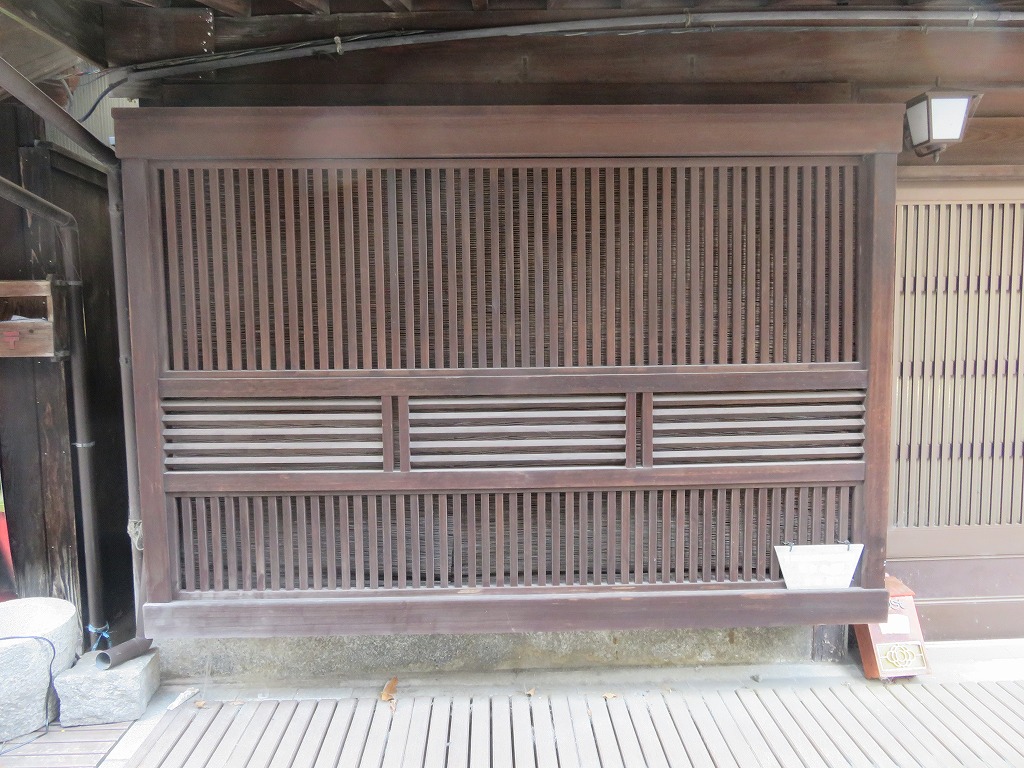
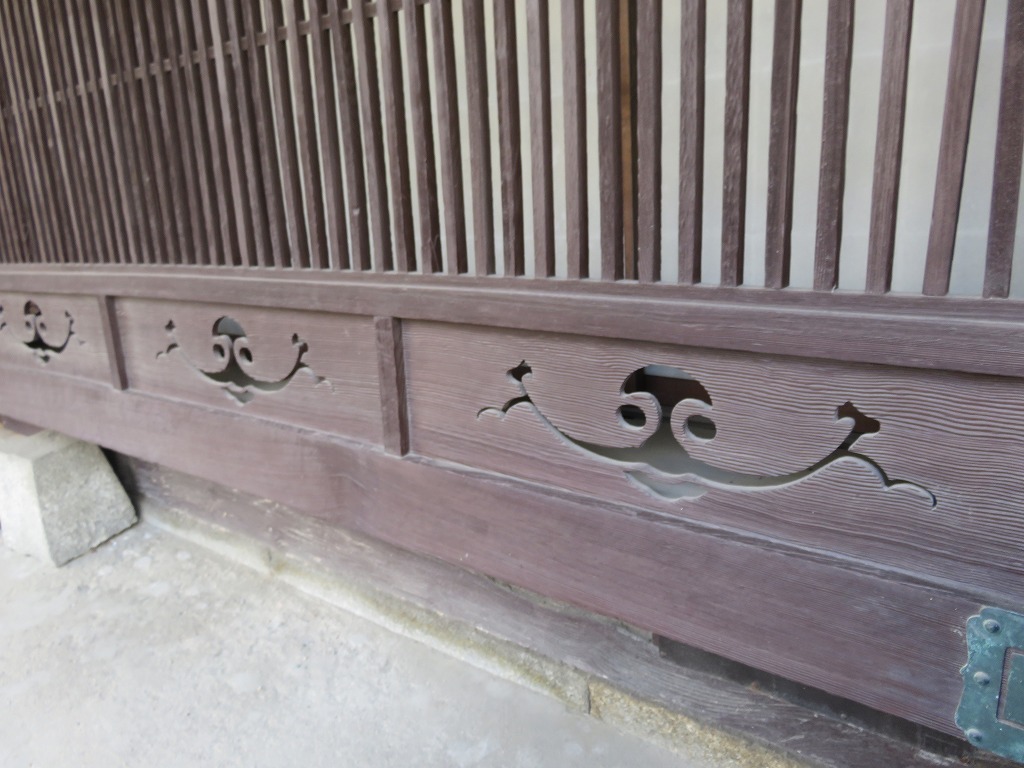
Known as “Takehara lattice,” these decorative wooden lattices were commonly used on the windows and eaves of merchant houses that prospered through salt production and sake brewing from the Edo to Meiji periods. Delicate cut-out designs can also be seen on the railings beneath the lattices, reflecting the refined craftsmanship of the time. Many examples can be found in traditional townhouses around Honmachi Street in Takehara.
Namakokabe (Plaster Wall)
Okonomiyaki Restaurant “Horikawa”
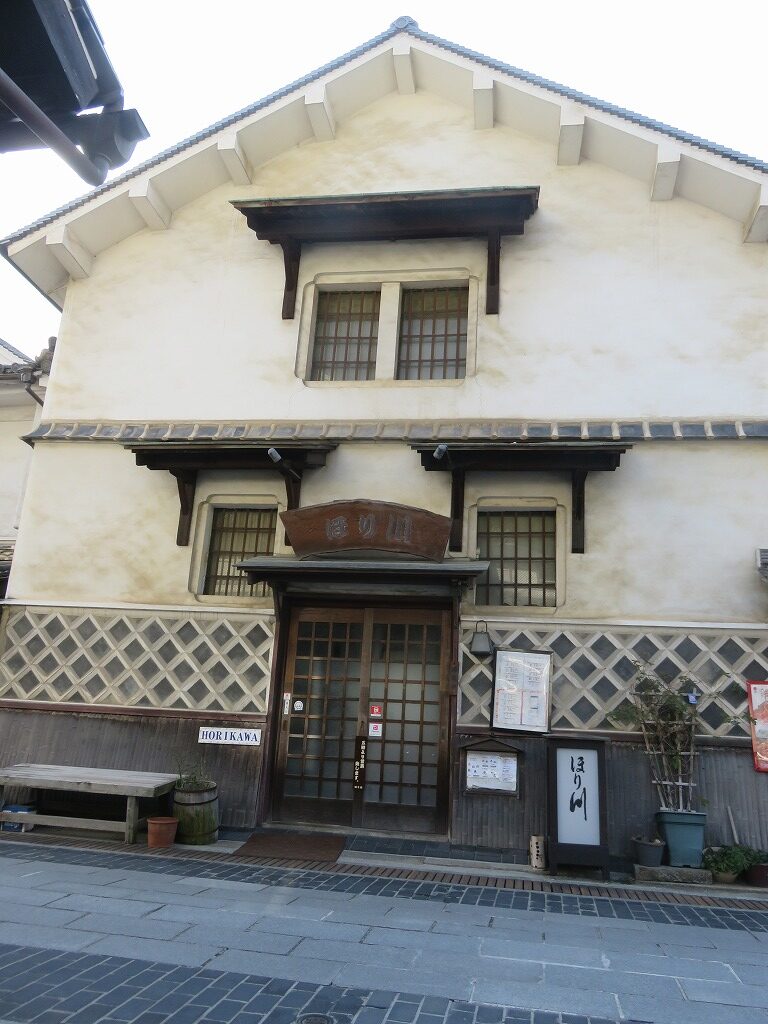
Horikawa is an okonomiyaki restaurant renovated from a former soy sauce brewery warehouse dating back to the Taisho era. The building features traditional Japanese storehouse architecture, including the distinctive “namakokabe” plaster wall style. It is also well known as the model for the okonomiyaki restaurant featured in the anime Tamayura.
Mushikomado (Fire-Prevention Windows)
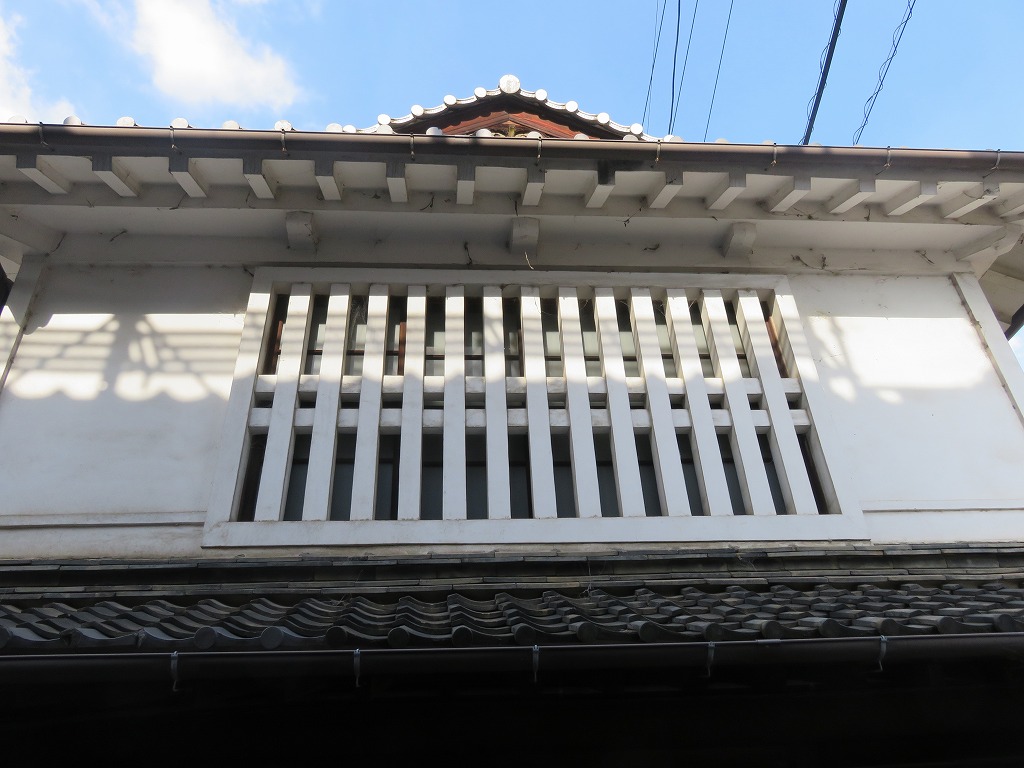
Mushikomado are fire-prevention windows that became widespread during the Edo period. They are constructed by coating a wooden lattice with plaster and are typically installed on the second floor of merchant houses. These windows allow light and ventilation while helping prevent the spread of fire. Their name comes from their resemblance to insect cages.
Former Kasai Residence
Exquisite Traditional Interior Fittings
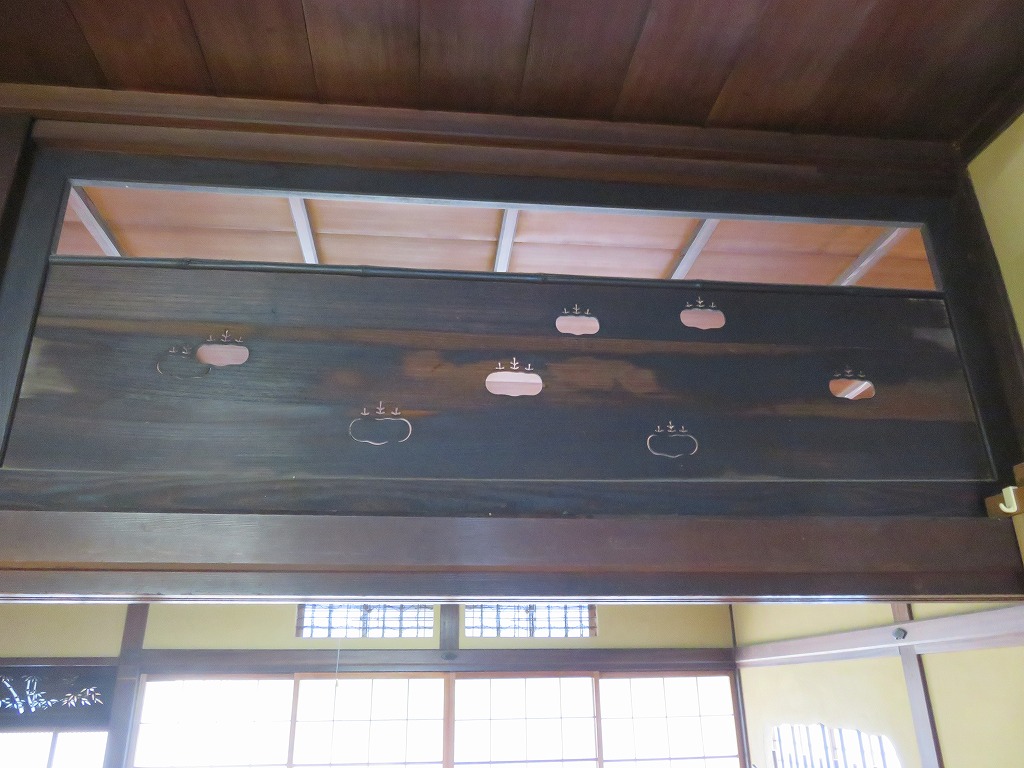
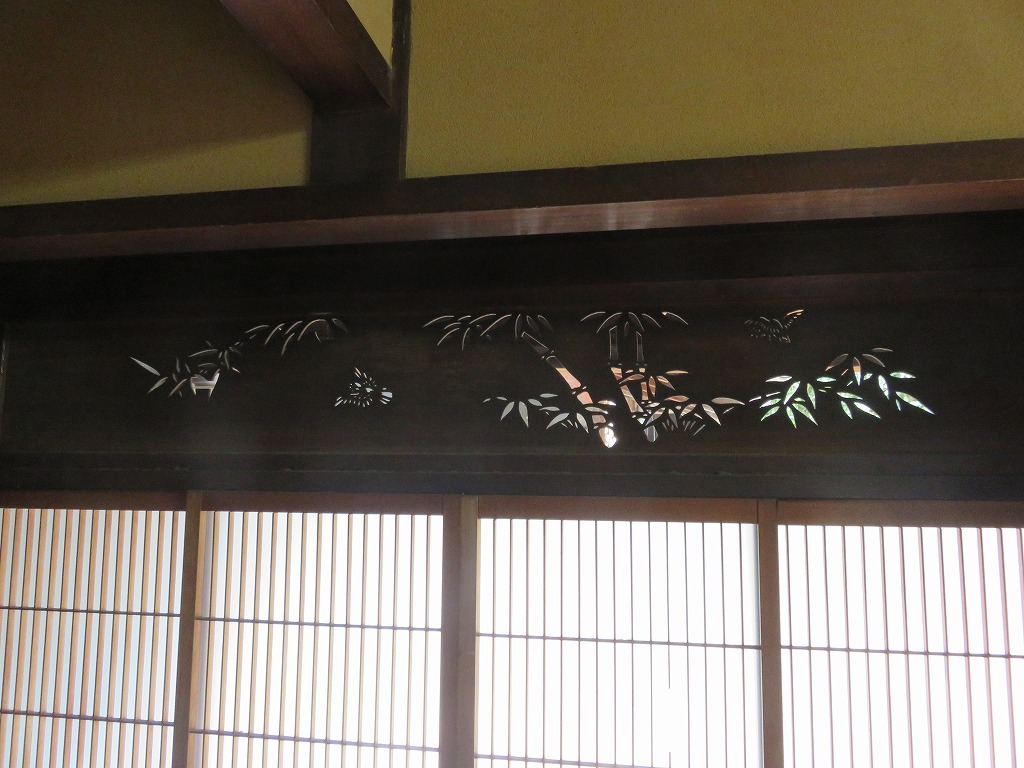
This is the interior of the Former Kasai Residence, which was open to the public at the time of the visit. Visitors are captivated by the beautifully aged and finely crafted fittings throughout the house.
Openwork Transom Panels (Ranma)
Kumiko Shoji Screens
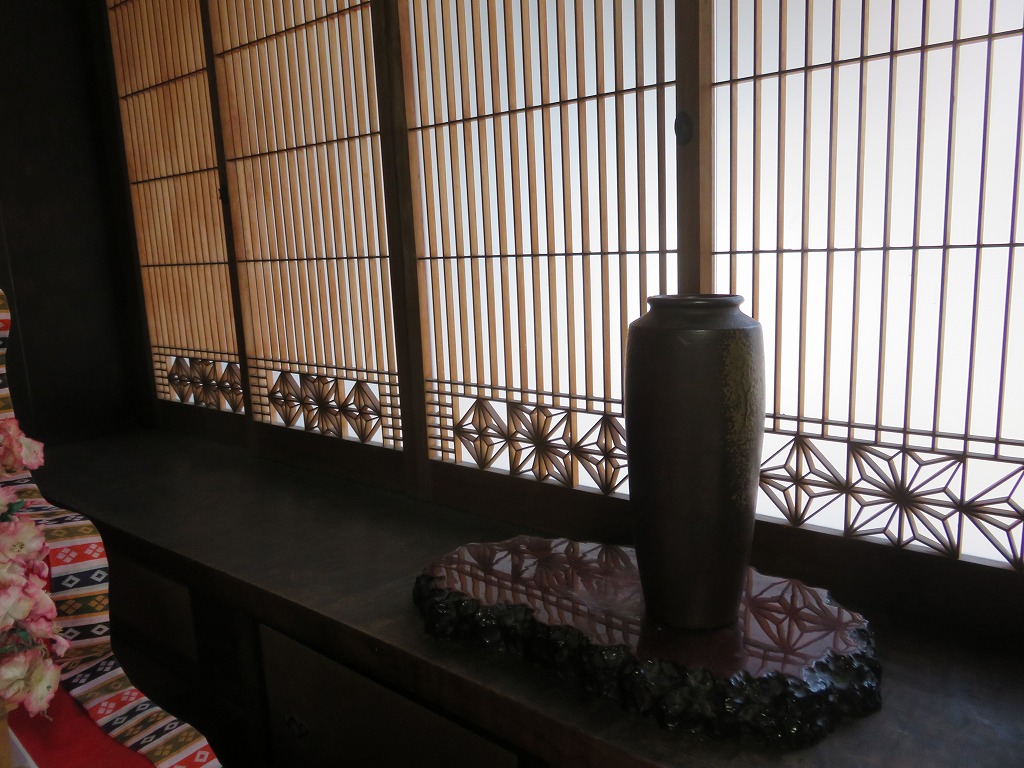
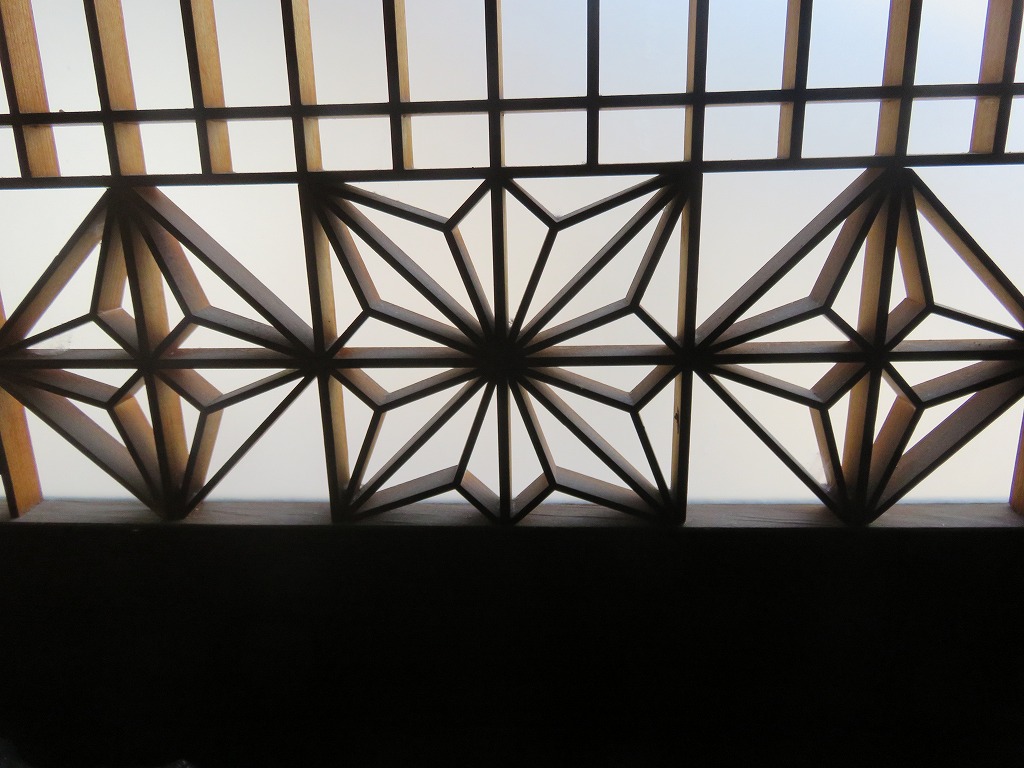
The delicately designed kumiko woodwork stands out beautifully on shoji screens as natural light filters through.
Decorative Bamboo Windows
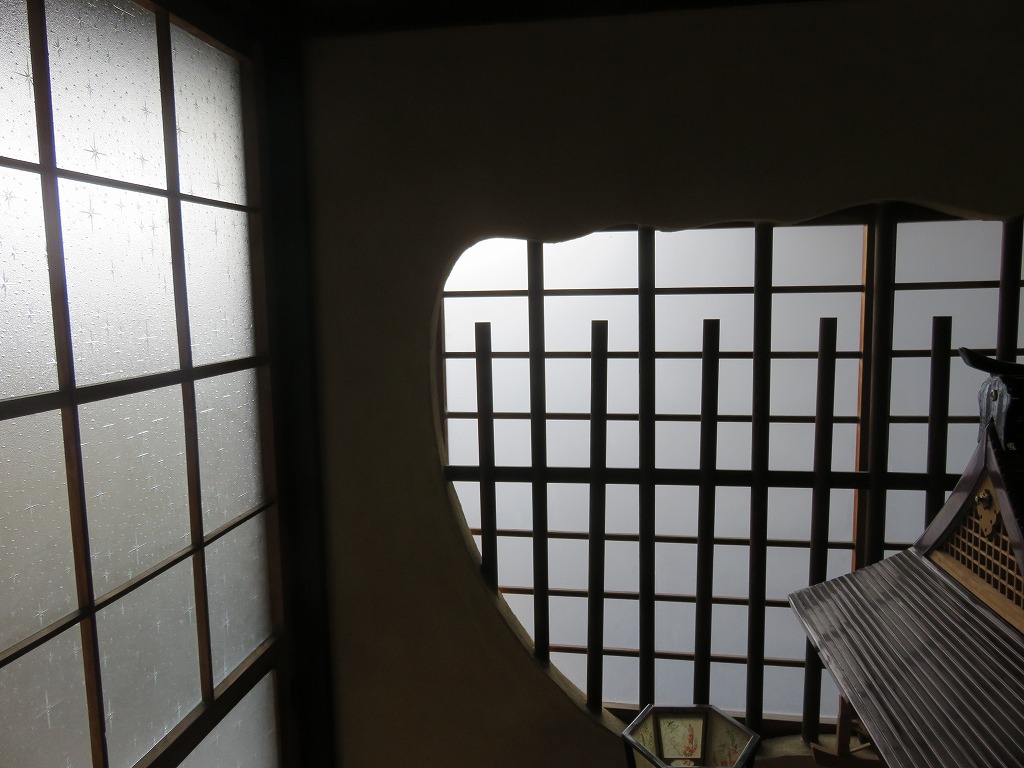
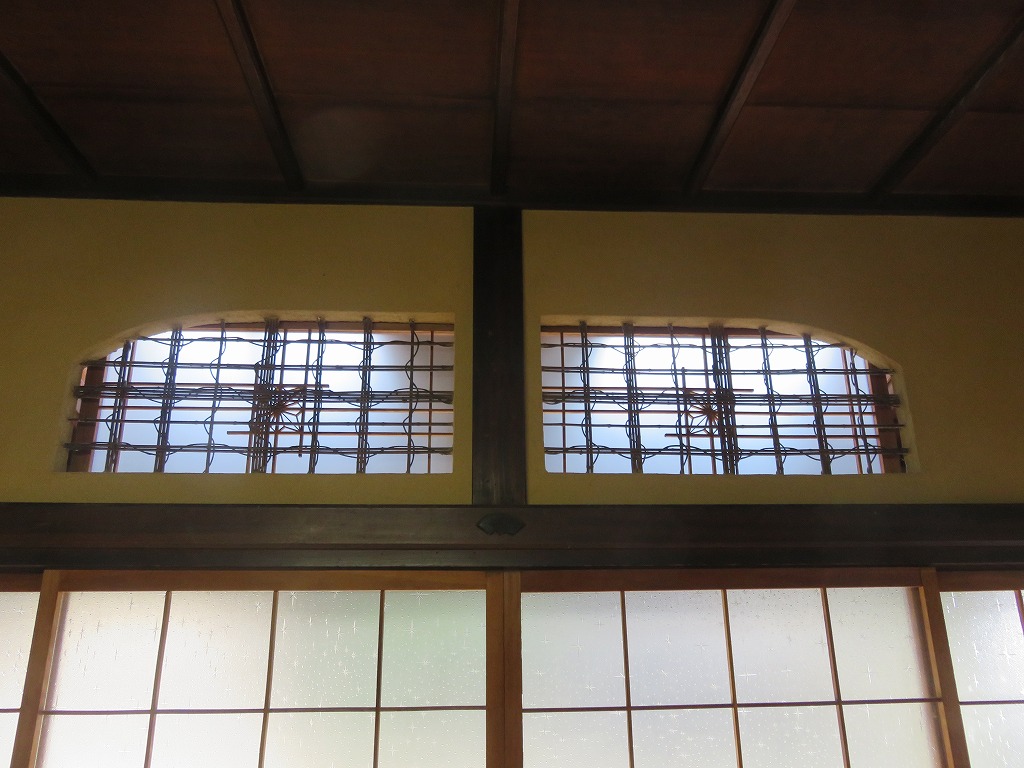
As a town closely associated with bamboo, many architectural elements here incorporate bamboo materials. At the center of this decorative window, a “Kaku-Asanoha” kumiko pattern is inset, highlighting the attention to detail.
Kumiko Woodcraft Products
Kumiko woodwork, traditionally used in architectural fittings, is now also applied to interior accessories. These items are popular as gifts and souvenirs.
Seller: Teraceya
https://teraceya.com/ja
*The official website is available in Japanese.
Summary of Tourist Spots in the Takehara Historic Preservation District
